Posts

Showing posts with the label Divorce Lawyer In Delhi

Does Consent Divorce Have No Cooling Time?

Image
SECTION 13(B) provided for divorce by mutual consent by presentation of the petition (first motion) in the District Court by the parties on the grounds that (1) they have been living separately for a period of one year or more, (2) that they have been unable to cohabitate, and (3) that they have mutually agreed that the marriage should be dissolved. SECTION 13(B) also provided for second petitions to be filed not earlier than six months after the first petition. With time, the Indian Courts encountered a number of these divorce cases in which the parties were adamant that their differences could not be resolved and would continue to exist even after the statutory cooling-off period of six months, which begins on the date the first petition or motion was filed. Case Laws: The Statutory Cooling Off Period was finally allowed to be waived off after taking into account some factors outlined by the Supreme Court of India in Re: Amit Kumar v. Suman Beniwal- SC judgement_11-Dec-2...

Is A Non-Working Spouse Entitled To A Divorce?

Image
Marriage dissolution is never simple. When there is a substantial discrepancy in income or when a partner is unemployed at the moment the divorce is filed, this may be particularly true. It is common to wonder and worry about how a divorce may affect your financial future, whether you are a working partner or a non-working spouse, and vice versa. What Rights Does a Non-Working Spouse Have in a Divorce? In a divorce, the entitlements of a non-working spouse can vary depending on the jurisdiction and the specific circumstances of the case. However, there are some common aspects to which a non-working spouse may be entitled: Spousal Maintenance or Alimony: Spousal maintenance, also known as alimony, is a financial support payment made by the earning spouse to the non-working spouse after the divorce. Its purpose is to help maintain the non-working spouse's standard of living and meet their financial needs. The amount and duration of spousal maintenance can vary and may ...

Is Hindu Marriage Act Permitting To File Divorce?

Image
The Hindu Marriage Act is legislation enacted in India in 1955 that governs Hindu marriages and related matters. It provides provisions for divorce, among other aspects. Under the Act, both contested and mutual consent divorces can be sought by Hindu individuals. It outlines various grounds for divorce, such as cruelty, adultery, desertion, conversion, mental disorders, and more.  The Act also lays down the procedures and legal requirements for obtaining a divorce, including the jurisdiction of family courts, filing of petitions, counseling, maintenance, child custody, and property division. The Act aims to address the legal aspects of marital dissolution within the Hindu community and provide a framework for resolving issues arising from divorce. Mutual Consent Divorce: Hindu Marriage Act Mutual Consent Divorce under the Hindu Marriage Act is a provision that allows married couples to seek a divorce by jointly agreeing to end their marriage. The key features of a mutu...

What Is The Rule For Divorce In India After Marriage?

Image
The legal conclusion of a marriage is a divorce. With time, opinions and convictions about the marriage system continue to evolve. According to the demands of the day, India's divorce laws are also altered. Therefore, it's crucial to comprehend the new divorce laws that India will implement in 2022–2023. Divorce cases were quite rare in ancient times in India. However, it has been noticed that people's perspectives have evolved with time. If the partners now feel that their marriage cannot survive, they will not delay filing for divorce. To resolve divorce disputes and ensure that all parties receive justice, the courts adopt regulations. Rules: Adultery, cruelty, abandonment, conversion, mental illness, venereal disease, and irretrievable dissolution of the marriage are just a few of the grounds that might lead to a divorce being granted. The district court that has jurisdiction over divorce matters is the one where the couple most recently shared a resid...

Why Do Cooling Period Is Required In Divorce Matters ?

Image
In a mutual divorce, both the husband and the wife agree to the divorce and the terms and conditions of the separation. This type of divorce is typically speedier and less expensive than one that is contested. The majority of couples decide to divorce peacefully to avoid drawn-out and expensive judicial fights. If both parties agree on the reasons for the separation, the court will typically grant the divorce without any problems. There is just one catch: both spouses must agree to every aspect of the separation in order for the mutual divorce to be finalized. This covers alimony, child custody, and property division. They must submit a contested divorce application if even one of their marital disagreements cannot be resolved.  Any couple who applies for a mutual divorce must adhere to the cooling-off period. The pair has the chance to reflect during this time and possibly reach an understanding. The typical six-month cooling-off period has a few exceptions. For instance,...

Can A Person Get Divorce Without Their Spouse Signature?

Image
Even the most pleasant divorces may be emotionally draining and exhausting. However, if your husband is unwilling to sign the divorce papers, it could render things much more difficult and irritating for you. If you've decided to divorce, you're probably eager to get it over with so you are able to concentrate on obtaining a fresh start. When your husband refuses to sign the forms, you may become enraged, bewildered, and impatient to move things ahead. Reasons for not signing the Divorce Papers First and foremost, you should try to understand why your partner is reluctant to sign. This activity could be motivated by a variety of factors. In some circumstances, sitting around and clearly communicating to your partner that you are no longer happy in the relationship could convince them to sign. Some people believe that pulling out of the agreement will give them control over their partner, thereby making the other partner desperate enough to make compromises sole...

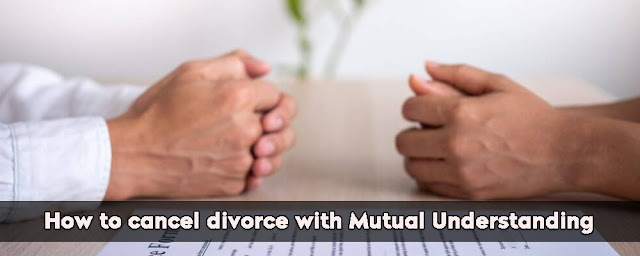
How To Cancel Divorce With Mutual Understanding

Image
It is more harmonious if both parties agree on the termination of marriage peacefully rather than fighting in the courtroom and defaming each other. Under the virtue of Section 13B of the Hindu Marriage Act, they can file a joint petition in District Court, and the Court can give them a divorce. But if the couple changes their views and wants to save their marriage, in that situation, they can submit a petition with the court where their divorce is being handled, indicating that they would like to withdraw or cancel their divorce permission and give their relationship a second chance. If both spouses agree to withdraw, the issue can be settled amicably, and the court dismisses the petition. Remedies for the Cancellation of Divorce with Mutual Understanding The court will not provide a divorce decree if the spouses submit an application to the court saying that they do not plan on seeking Mutual Divorce Process . That is feasible while the case is on-going in court for six...

How To File Divorce After 40 Years Of Marriage

Image
Any divorce involving parties who are 40 or more years of age is referred to as “gray divorce”. Divorce is never simple, and as you get closer to the age of retirement, a whole variety of other issues come into play. While child support and custody battles are typically not a concern, other disagreements may arise in their stead. The importance of health insurance, Social Security, and other retirement benefits increases. Why do Couples Who are 40 and older file for Divorce? Abuse - Either of the parties may choose to file for divorce if they have experienced verbal, psychological, or emotional abuse. Addiction- The marriage may suffer if one partner battles with alcohol, betting, or other drug problems. Due to their habits and addictions, they may misuse marital funds, tell lies, or alienate their partner, all of which can cause frustration and eventually result in divorce. Financial Issues- Money-related problems are one of the main reasons for divorce among cou...

What If Husband Changed Mind To Sign Divorce Papers After Court Order

Image
The divorce procedure in India starts with the filing of the petition and is completed by the issue of the divorce's final decree. The divorce process is broken down into six stages: petition filing, summons served, response, trial, interim orders, and final order. The simplest definition of divorce is the formal dissolution of a marriage through the legal process of going to court, however there are other ways to acquire a divorce in India, including distinct ways for Hindus, Muslims, and Christians. Not only do the husband and wife separate during a divorce, but also the child's custody and property division are involved. Finding points of settlement and cohabitation between the husband and wife is always the goal of divorce law. The court may approve a divorce if the couple is not in a position to work things out. Marriage is dissolved as a result of divorce, which is a legal action against the outside world. To reflect the shift in marriage patterns, the laws g...

What If The Husband Has Not Signed Over The Divorce Papers ?

Image
Divorce is the legal process by which a marriage is declared void and allows the parties to the marriage to part ways and remarry. Two types of divorces, which are allowed as per the Indian laws, which could be filed by the parties are mutual and contested divorce.  Hence, in case your husband is not agreeing to divorce, you may file for divorce on your own, making your wife the respondent. The divorce in this scenario could be filed only on the grounds provided under various Acts.  The Hindu Marriage Act, 1955 The Dissolution of Muslim Marriage Act, 1939 The Indian Divorce Act, 1869 Parsi Marriage and Divorce Act, 1936 The Special Marriage Act, 1954 The grounds on whose basis a contested divorce procedure could be initiated in India are- Adultery, Cruelty, Desertion, Conversion, Grave Mental Disorder, Communicable Venereal Diseases or some  other grounds including the impotence of the spouse, imprisonment, failure to provide maintenance, et...